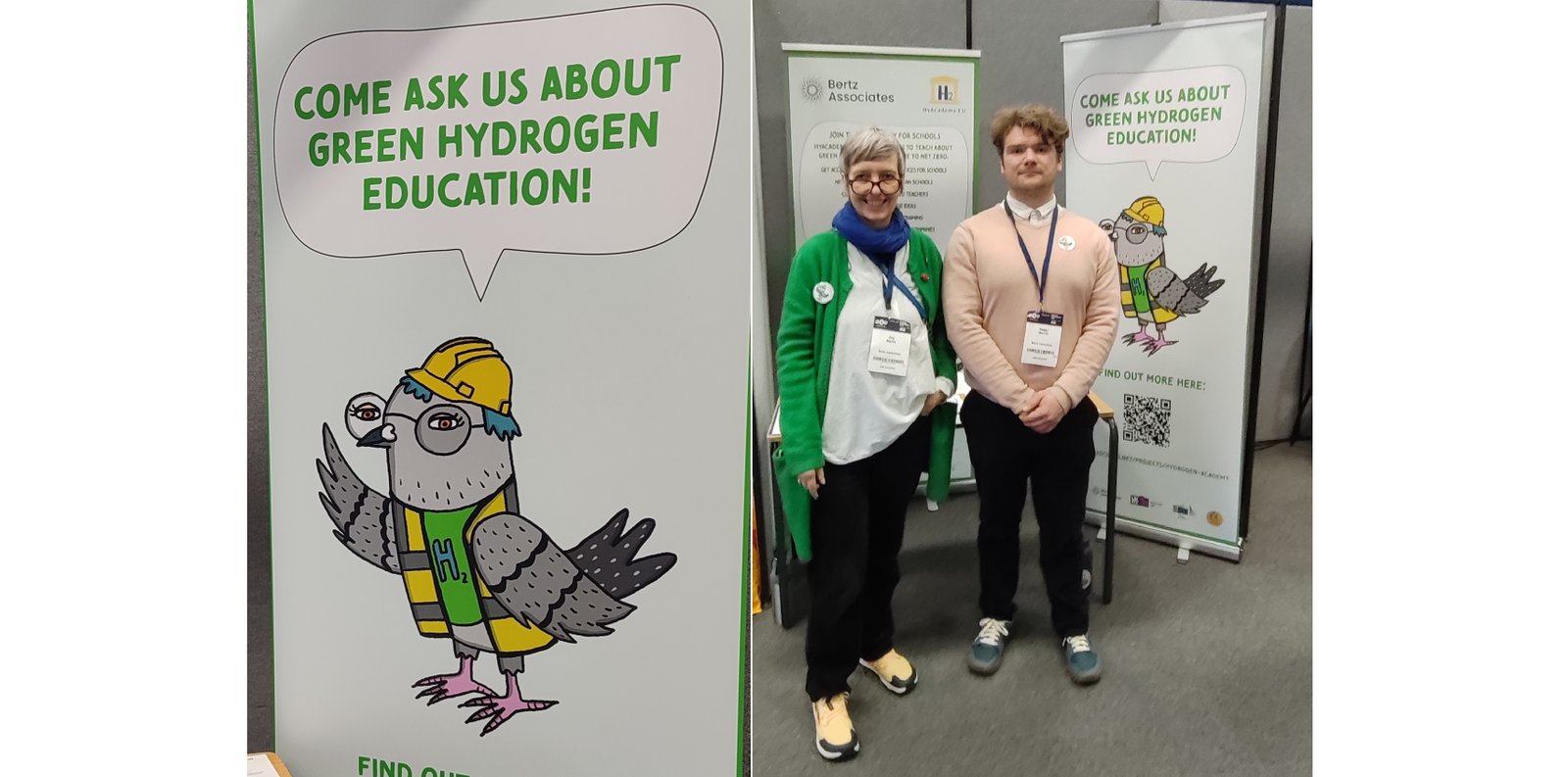


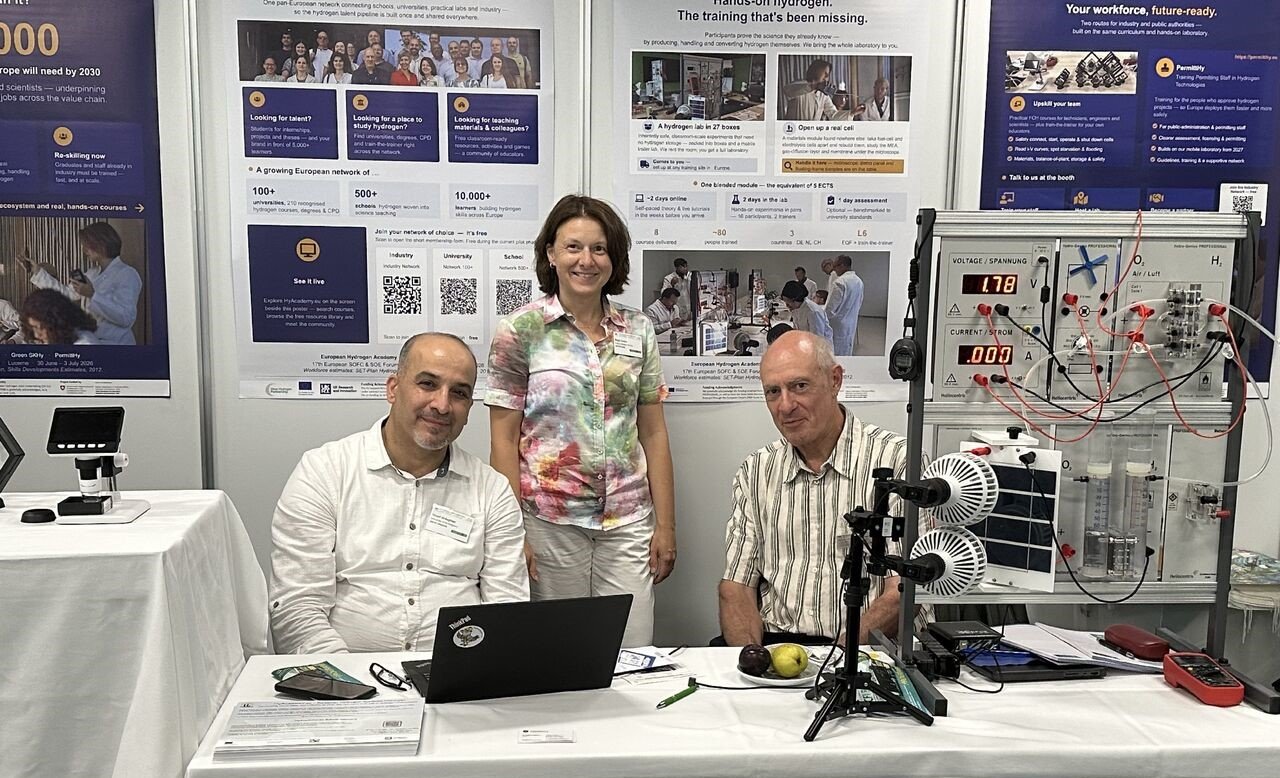
At the beginning of January 2026, representatives from Bertz Association and HyAcademy attended the Association for Science Education Annual Conference at the University of Nottingham. A stand was secured at short notice, and the event was used to engage with teachers and educators and to showcase hydrogen-related learning resources. Due to adverse weather conditions, the team remained in Nottingham overnight rather than travelling back to Birmingham. Despite initial concerns about reduced attendance, visitor numbers remained high throughout the event. Example learning resources were shared with attendees, including quizzes, careers mapping activities, and visual materials related to electrolysers.
Over the course of nearly three days, valuable insights were gained into the realities of school education across different countries. In the UK context, a key barrier to introducing hydrogen education in schools is the already crowded curriculum and the continued emphasis on fossil fuels within chemistry teaching. Nevertheless, there was strong interest among teachers in adopting more sustainable and future-oriented approaches to energy education. Concerns were also raised regarding gender participation in science, with a shared recognition of the need to improve engagement, particularly among girls. Participants highlighted that disengagement from science subjects often begins at primary school level.
The conference provided opportunities to connect with educators from several European countries, including Norway, Denmark, and the Netherlands. In Denmark and the Netherlands, teachers reported greater scope for project-based learning and expressed a clear need to link learning activities to real-world industrial developments. In Norway, hydrogen has recently been removed from the formal curriculum; however, educators expressed continued interest in engaging with hydrogen education initiatives to maintain coverage of green hydrogen topics.
Discussions with other exhibitors highlighted common challenges faced by educators, including high workloads alongside strong commitment to delivering broad and relevant education, particularly in relation to sustainability topics. A number of organisations were identified as already providing hydrogen-related teaching materials, presenting opportunities for future collaboration and hosting of selected open-access resources on the HyAcademy platform.
The event enabled engagement with over 200 participants. Follow-up activities are now underway to build on the contacts and discussions initiated during the conference. In addition, an article about the HyAcademy project will be published in the Association for Science Education magazine to further disseminate project activities and outcomes.






HyAcademy Project is supported by the European Union via the Clean Hydrogen Partnership - Joint Undertaking under Grant Agreement No: 101137988
Project Lead: Prof. K.Bouzek, Prof. Steinberger-Wilckens

 Resource Centre
Comment (0)
No comments available.